
Menashe Kadishman and Igael Tumarkin + Hedwig Grossman and Rudi Lehmann


In the 1950s, when Hedwig Grossman and Rudi Lehmann lived in the Ein Hod Artists Village, Lehmann gathered around him a group of students who would go on to become prominent figures in Israeli art, among them Igael Tumarkin and Menashe Kadishman. His influence on their development went far beyond the boundaries of technical instruction. Their relationship included sustained artistic exchange and regular games of chess, and evolved into a deep friendship that endured for decades.
Lehmann and Tumarkin formed a particularly close bond, grounded partly in their shared biographical background: both German-born, they grew up without a father and cast their lot with Israel. This friendship, documented in letters and postcards that Tumarkin sent from Israel and abroad, carried over into their professional lives. The two held joint exhibitions, and Tumarkin incorporated tributes to his teacher into his works and wrote curatorial texts about Lehmann's pieces. Kadishman, too, maintained warm, enduring ties with both Lehmann and Grossman: their correspondences, which include postcards and letters featuring humorous illustrations, testify to genuine affection.
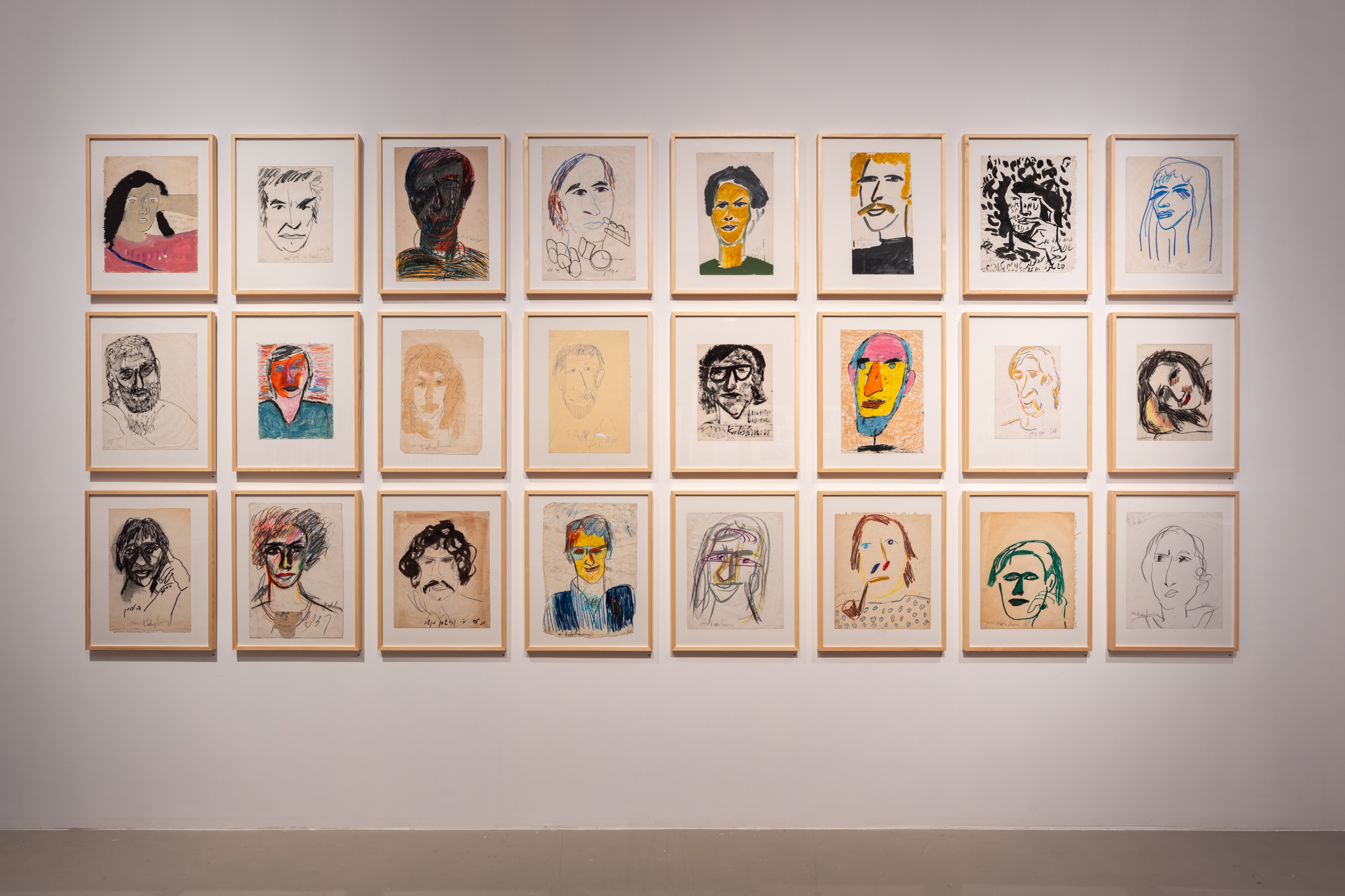
The exhibition features private correspondences that shed light on these relationships. Alongside them are early works by Tumarkin and Kadishman where their debt to Lehmann's world is clearly visible. The exhibition thus reflects how even such prominent and gifted artists needed a formative figure to offer grounding and support in the process of finding their own voice.
From Lehmann's teaching, Tumarkin distilled analytical precision and structural discipline, charging them with turbulent material tension and sharp social critique. Kadishman, in turn, embraced Lehmann's unmediated connection with nature and with the vitality of the animal world, but exchanged Lehmann's clean organic sculpture for free gestures and raw instinct. The animal became a charged collective symbol in his work.
The archival materials uncover the deep and layered nature of Lehmann's relationship with and influence on his students. Beyond transmitting technical or thematic knowledge, what transpired between them was an ongoing dialogue of identities – wherein the meaningful bond with the teacher sustained the articulation of a new and independent artistic language. Exploring these close ties among teacher and students serves to pierce the aura surrounding their seemingly larger-than-life figures. It allows us to encounter Kadishman and Tumarkin not only as monumental creators but as human beings: we can trace stages in their development and intimate moments in their relationships, discern expressions of doubt, and discover the professional generosity they showed one another throughout their careers.