
Siona Shimshi and Jachin Hirsch


The first documentation of Siona Shimshi (1939–2018) in Jachin Hirsch's (1934–2011) photographs shows her on the beach in Jaffa. In this image she turns her gaze away from the camera held by the man who would go on to document her consistently for over five decades. From their first meeting in 1958, as very young people, they built a life together, each pursuing their own practice: Shimshi was a multidisciplinary artist and designer who worked primarily in sculpture, ceramics, and textile. Hirsch was a photographer and filmmaker. Exploring the couple's shared archive reveals the centrality of Shimshi's presence in Hirsch's work. Year after year he photographed her working on her art, installing her exhibitions, standing alongside her pieces in public spaces, but also in more private moments, in the personal and domestic spaces they built together.
Before their joint departure to study in New York in 1959, Shimshi studied sculpture and painting with several artists, as well as at the Avni Institute of Art and Design. Hirsch concentrated on still photography and even held an early solo exhibition at the Dugit Gallery. Over the three years they spent together in New York, Hirsch enrolled at City College while Shimshi studied ceramic design at Alfred University. On their return to Israel, Hirsch worked as a cameraman for Geva Newsreels, became part of the local film industry, and made numerous documentary films. Shimshi worked as a designer and artist, collaborated with the Maskit fashion house and with Lapid Ceramics, was a founding member of the 10+ collective, and in the 1980s headed the ceramics department at the Bezalel Academy of Arts and Design.
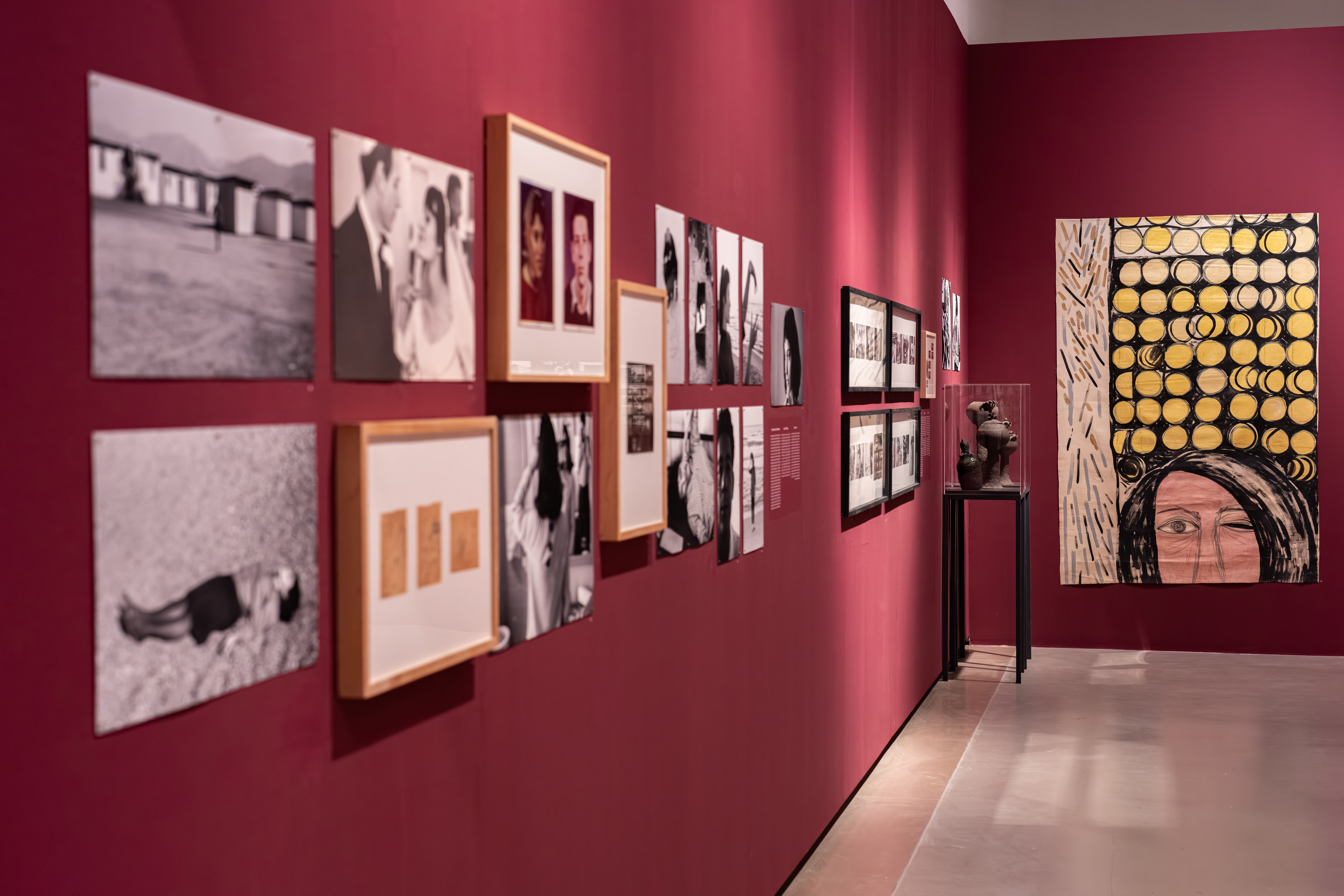
The couple's shared archive and Shimshi's later archiving work reflect a complex relationship between partnership and artistic creation. Photographs, sketches, documents, and personal materials shed light on their public presence. Conversely, certain clusters of carefully chosen images – such as "Documenting Couplehood" or "Shimshi Sleeping" – reveal very private dimensions of their lives. Hirsch's photographs cannot be taken as neutral documentation, but rather testify to the close, intimate gaze of a partner and companion. Set against the dominant presence of Shimshi's image in his work, the relative rarity of their appearances together stands out in the documented materials, as does Hirsch's limited presence in Shimshi's body of work. What emerges is a relationship where life and artistic creation coexist in a shared space defined by closeness and continuity, on the one hand, and by marked asymmetries, on the other.